Friendly customer service and expert in their field recommend everybody who is looking best finished product and joyful experience.
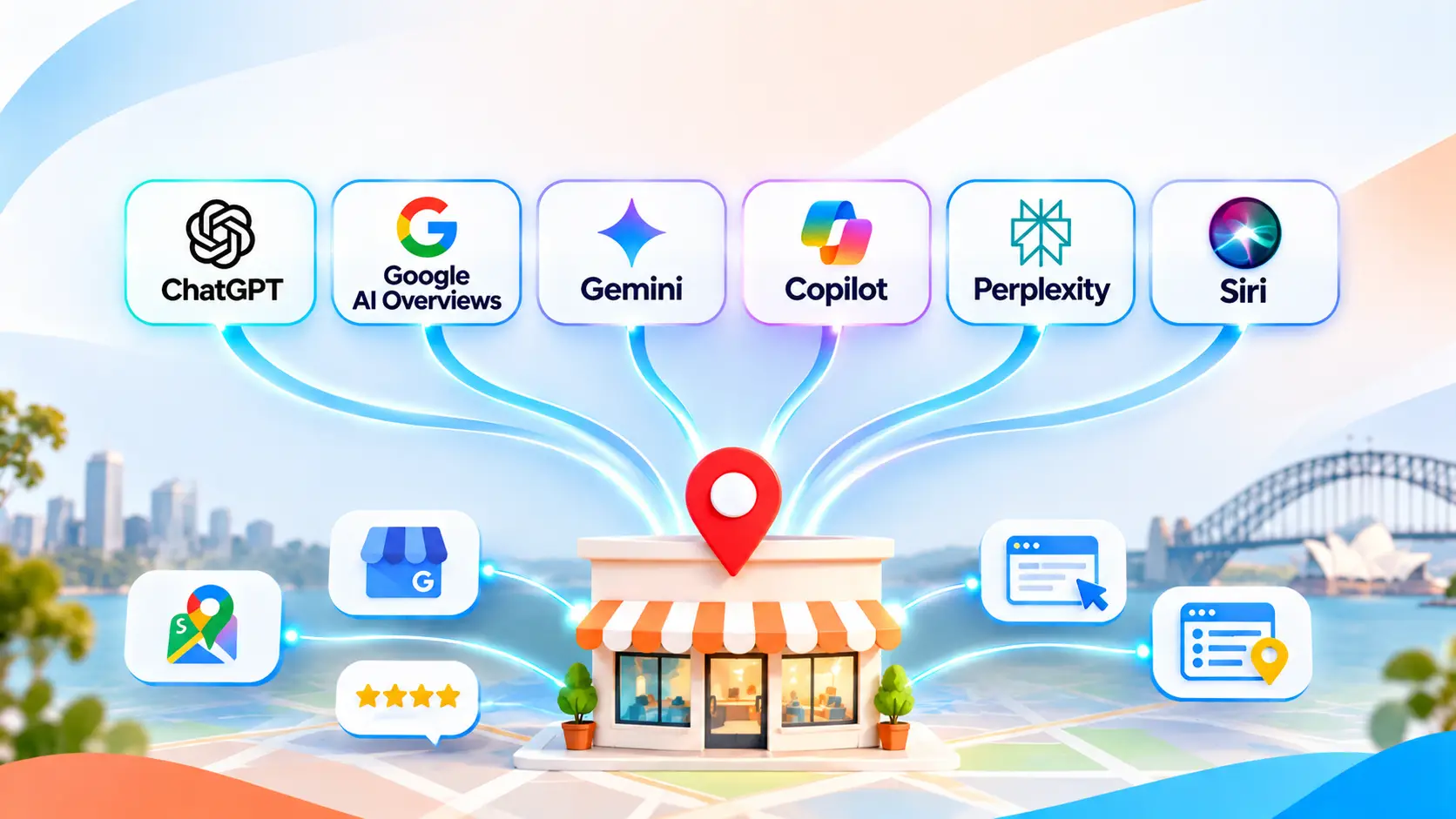
How ‘Near Me’ Searches Work in AI Assistants
Type “plumber near me” into Google and you get the usual: a map, three pins, a long list you can scroll for days. Ask ChatGPT the same thing and it hands back two or three names. Maybe a sentence on each. No map, no page two.
That’s near me AI search in a nutshell. Same question your customers have always asked. Very different answer.
The short version: what got you into the Google Map Pack only gets you halfway into an AI answer. Below we unpack how assistants work out where someone is, where they get their business data, and how they pick who to name.
What Is a Near Me AI Search?
A near me AI search is when someone asks an AI assistant like ChatGPT, Gemini or Copilot to find a business close by. Instead of a map with twenty pins, the assistant estimates where you are, checks a handful of sources and returns two to five names, usually with a line on why each one made the cut.
People rarely type “near me” into a chatbot, by the way. They write things like “who’s good for a running injury in Parramatta, open Saturdays?” The assistant reads that as local intent anyway.
Plenty of Australians now search this way. The Telsyte Australian Artificial Intelligence Study 2026 counts 17.4 million AI users here, 77% of people aged 16 and over. One in eight, 12%, now name AI tools as their main way of finding information online. A year earlier that was 5%.
Worth knowing if you compare sources. Roy Morgan published a different count on the same day, 13.6 million, or 58% of Australians aged 14 and over. Both are sound. They measure different things: Roy Morgan counts active use in an average four weeks among over-14s, Telsyte counts any use among over-16s. The direction is identical either way, and we cover the behaviour side in how Australians use AI to search.
We noticed the local shift in our own backyard first. In July 2026 we ran Google Autocomplete for every service we sell. Every single one came back with a “near me” variant. Our customers search locally, and a growing slice of them now do it in a chat window.
How Do AI Assistants Know Where You Are?
They need a location before “near me” means anything. There are two kinds.
- Approximate location. A rough fix on your region. Enough to know you’re in Penrith, not Perth. Fine for weather, local news, broad suggestions.
- Precise location. Your phone’s actual coordinates. You need this for “coffee near me right now”, where 300 metres matters.
ChatGPT only added location sharing in March 2026. It stays off until you turn it on in Settings, and on mobile you can share the rough location without the precise one. Google is a different story. Between Maps, Android and your Google account, it has known roughly where you are for years.
Most businesses miss what follows. Telsyte found just 26% of Australians are comfortable granting an AI tool access to their location, the third most-accepted data type after calendar (32%) and email (24%). So a large share of near me searches run on a rough guess, or on whatever suburb the person types. A website that never actually names the suburbs you work in gives the assistant nothing to match.
Where Does Each AI Assistant Get Its Local Results?
This is the part most guides get wrong.
You’ll still read that “ChatGPT just uses Bing”. That was roughly true once. It isn’t a safe assumption now, and the data says so.
BrightLocal analysed ChatGPT’s local search sources and found business websites made up 58% of them, with business mentions on other sites at 27% and online directories at 15%. Not a Bing ranking in sight. That was December 2024 and US-based, so read it as direction rather than law, but the shape is clear: your own site and your off-site mentions do the heavy lifting.
Google’s local AI Overviews behave almost the opposite way. Whitespark found 60% of citations in local AI Overviews pointed to third-party sites like Yelp, Reddit and Thumbtack, with only 40% going to the business itself.
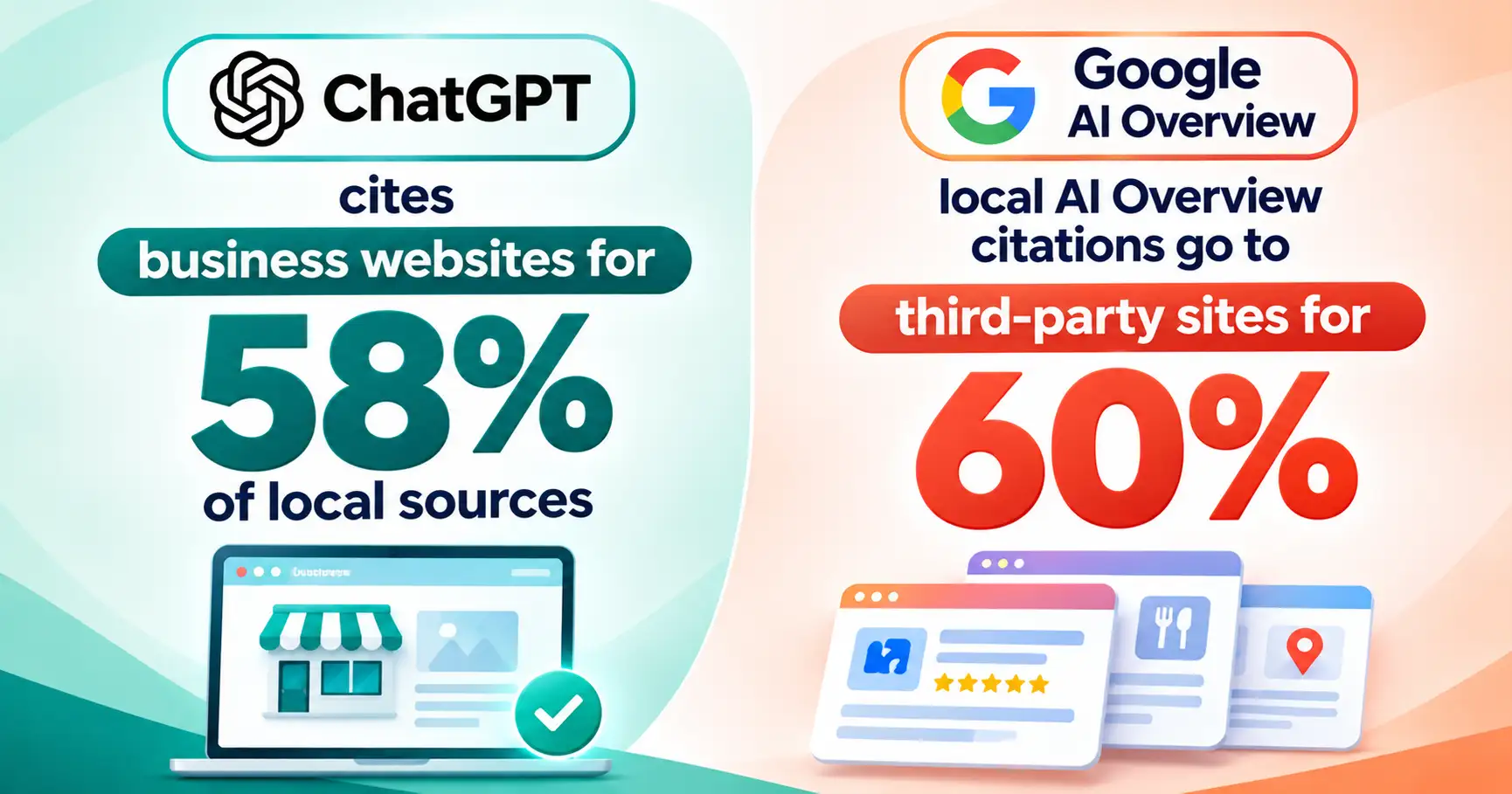
Two engines, two nearly inverted source profiles. That alone should end the idea of a single “AI SEO” checklist.
Here’s where things stand as of November 2026:
| AI Assistant | Where Its Local Data Comes From | What to Do About It |
|---|---|---|
| ChatGPT | Business websites (58% of local sources), business mentions (27%), directories (15%), plus its own search index. | Your own website matters most here. Then mentions on other sites. |
| Google AI Overviews and AI Mode | Google’s search index, Maps and Business Profile data. 60% of local citations go to third-party sites. | Normal local SEO drives this. Your presence on Yelp, Reddit and directories counts more than you’d expect. |
| Gemini | Google Maps data, including reviews, ratings and hours. | It reads what reviewers wrote, not just the stars. |
| Microsoft Copilot | Bing index and Bing Places. | Claim Bing Places. Most Australian businesses never have. |
| Perplexity | Its own web index, weighted to recent pages. Local sources aren’t publicly documented. | Fresh, specific pages and off-site mentions help most. |
| Siri and Apple Maps | Apple Maps business data, via Apple Business Connect. | Claim it, especially if your customers skew iPhone. |
So where do AI local results come from? Roughly anywhere your business shows up online.
How Does AI Decide Which Local Business to Recommend?
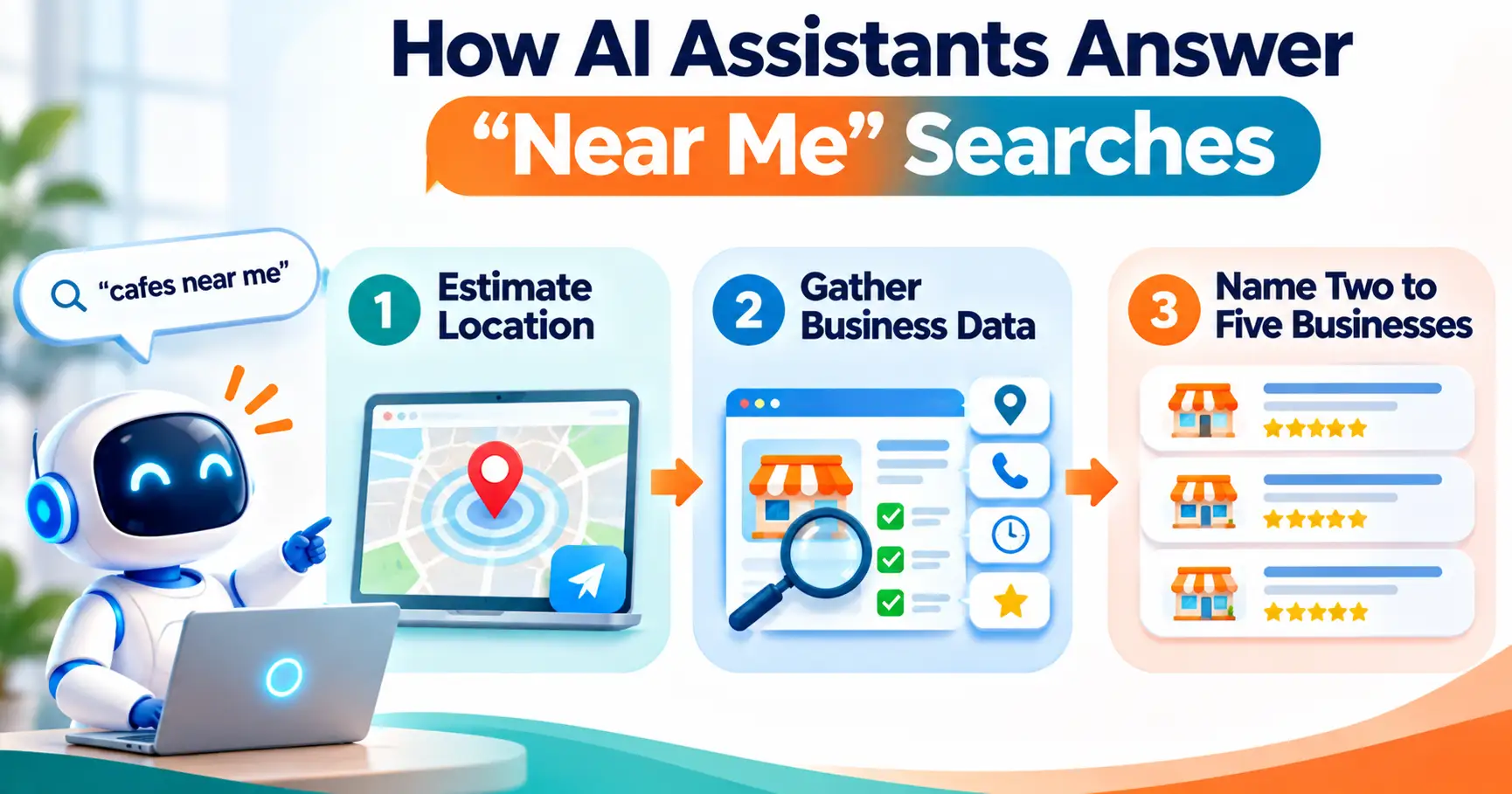
An AI assistant answering a near me search does three things. It works out roughly where you are, from your approximate location, the suburb you typed, or your exact GPS if you have allowed it. It pulls business details from maps, directories, review sites and business websites. Then it names the two to five businesses that fit the request and look consistent across those sources.
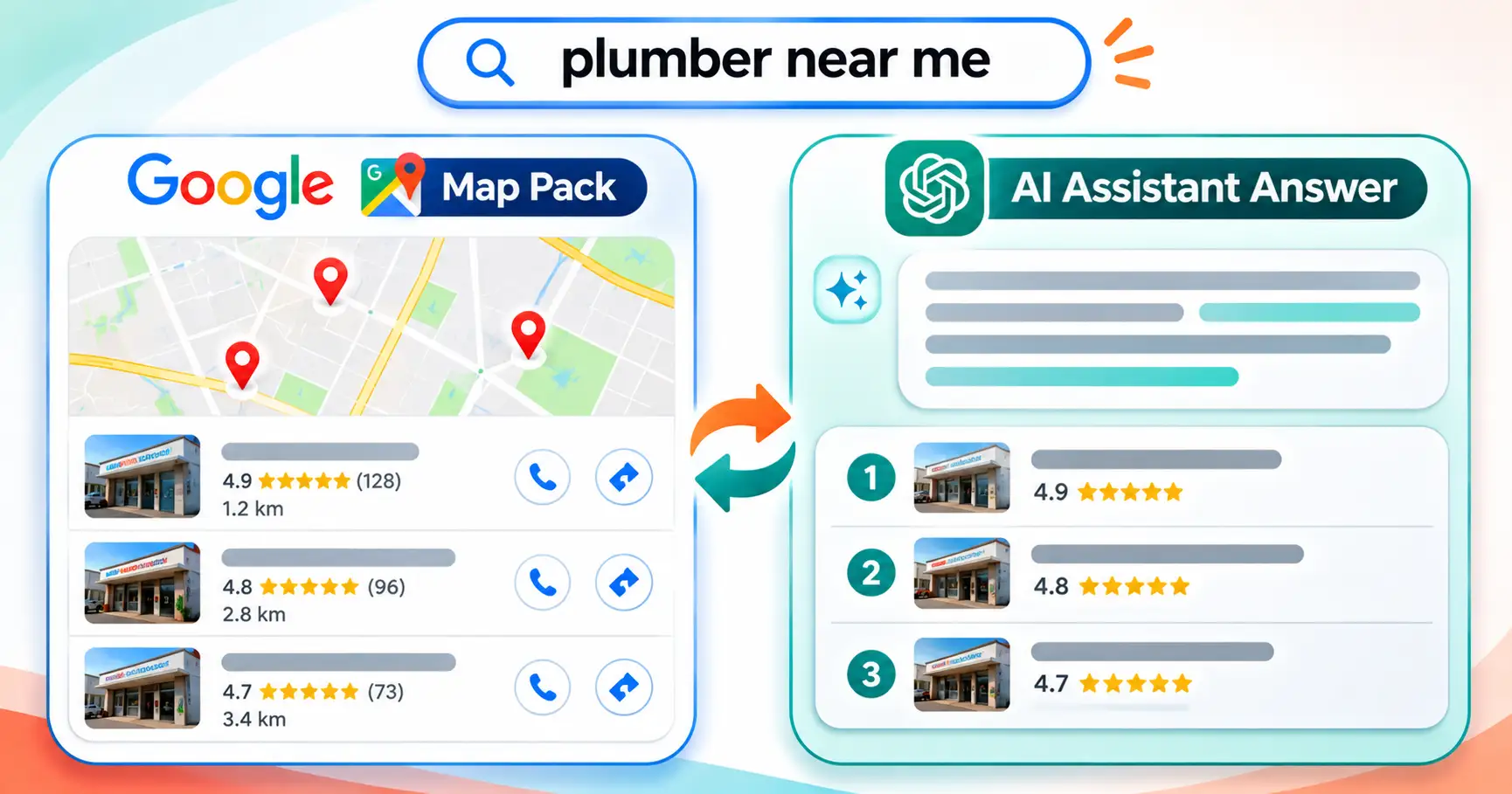
That cross-checking is what’s new. Google’s Map Pack runs on relevance, distance and prominence, with prominence leaning on links, reviews and ratings. AI assistants care about the same things. They just read more of it, and they compare.
So what are they actually checking?
- Does your business fit the question? “Emergency plumber, Penrith, Sunday” only matches you if your site and listings say emergency work, Penrith and weekend hours in plain words.
- Do your details agree? Same name, address, phone and hours on your website, Google Business Profile, Bing Places and directories. Mismatches read as risk.
- What do reviewers actually say? AI reads the words. Fifty reviews saying “sorted our hot water the same day” beat two hundred that just say “great”.
- Does anyone else mention you? Local news, “best of” lists, industry directories, the community Facebook group.
- Is your website any good? It’s 58% of what ChatGPT cites locally. A thin site hurts more than it used to.
We fold all of this into our generative engine optimisation work. It isn’t a separate trick.
How Is Near Me AI Search Different From the Google Map Pack?
The groundwork overlaps with ordinary near me SEO. Where it splits is at the top of the results.
| Comparison | Google Map Pack | AI Assistants |
|---|---|---|
| How many results | 3 pins, then a long list | Usually 2 to 5 names |
| Location used | Usually precise GPS | Often rough, or the suburb typed |
| Main data source | Google Business Profile | Several sources, cross-checked |
| Reviews | Volume, rating, recency | All that, plus what the reviews say |
| What the user does | Browses and compares | Often takes the shortlist as given |
| Life at position 8 | Someone might still scroll to you | Basically invisible |
That last row is the one that should worry you. Eighth on Google still gets the odd call. In an AI answer, if you’re not one of the handful named, you weren’t in it at all.
What Does This Mean for Australian Businesses?
Three things stand out.
Your own website carries more weight than you’d think. Business websites are 58% of ChatGPT’s local sources. Plenty of Australian trades and clinics have let their site go stale while pouring everything into their Google profile. That balance no longer holds.
Name your suburbs. With only about a quarter of Australians comfortable sharing location with AI, the assistant leans on whatever suburb is in the question. A page that lists the suburbs you cover gives it something to latch onto.
Keep reviews clean. Don’t buy them, don’t bribe for them, don’t bury the bad ones. The ACCC’s guidance on online reviews makes clear that fake reviews, significant incentives and hiding negative feedback can all mislead consumers under the Australian Consumer Law. Ask every happy customer. Reply to every review. The detail in them does the work.
Want to see where you stand? Our free strategy session includes a near me check across ChatGPT, Gemini and Google. Book one with our St Marys team or call 1300 189 687.
Why Do Multi-Location Businesses Get Hit Hardest?
Five branches means five chances to look inconsistent. An old phone number on one directory. A closed branch still listed. Location pages that are the same page with the suburb swapped out.
Google lets a fair bit of that slide. An assistant comparing sources reads it as doubt, then picks the competitor with tidier data.
Each location needs its own listing, its own page with real local detail, and identical core facts everywhere. Our guide to local SEO for multiple locations covers the setup step by step. AI assistants lean on exactly the same foundations.
What Should You Do First?
Five jobs, roughly in this order:
- Finish your Google Business Profile: services, service areas, hours, photos.
- Claim Bing Places, Apple Business Connect and your industry’s directories.
- Make your name, address, phone and hours match everywhere, down to the abbreviation.
- Give each location and service its own page, and name the suburbs you cover.
- Ask for reviews steadily, never buy them, and reply to every one.
Our local SEO strategies guide goes deeper on the Google side, or our local SEO service can take it off your hands.
After that, test it yourself. Once a month, open a fresh chat in ChatGPT, Gemini and Copilot and ask what your customers would ask. Note who gets named. That’s your local ranking report now.
Frequently Asked Questions
Does ChatGPT know my location?
Only roughly, unless you let it. By default it can use an approximate location to keep answers regional. Since March 2026 you can also share your exact device location, but that stays off until you switch it on. Without it, ChatGPT works from your rough location or the suburb you mention.
Where does ChatGPT get local business data?
Mostly from business websites. BrightLocal’s analysis found websites made up 58% of ChatGPT’s local search sources, followed by business mentions on other sites at 27% and directories at 15%. The old assumption that it simply mirrors Bing rankings no longer holds.
How does AI decide which local business to recommend?
It looks for businesses that clearly match the request and whose details agree across your website, Google Business Profile, directories, reviews and other sites that mention you. It reads review text, not only star ratings. A smaller business with clean details and specific reviews can beat a bigger one with messy listings.
Is near me SEO different for AI assistants?
Same foundations, different finish line. You still need a complete Business Profile, consistent listings, reviews and real location pages. But Google shows a long list, so eighth place still gets seen. AI assistants name two to five businesses, so being present isn’t enough.
Do Google reviews affect AI recommendations?
Yes. Gemini draws on Google Maps data, including reviews, ratings and hours, and summarises what people wrote. What the reviews say matters most. A review naming the job and the suburb is worth more than “great service, thanks”.
How do I check if AI recommends my business?
Write down five to ten questions your customers actually ask, like “best accountant in Penrith for a small business”. Each month, run them in ChatGPT, Gemini and Copilot from a fresh chat. Record who gets named and which sites get cited. Give it three months before reading anything into it.

1 business day response
100% confidential
No obligation
Book a Free Strategy Session
Client praise
Loved by clients across every industry
Your feedback is incredibly important to us. Explore testimonials from our valued clients — their words shape how we build every campaign.
01 / --
Trusted partners
We proudly work with different industries of all sizes
Client success is always a priority for us. We deliver high-quality solutions tailored specifically to our clients' needs — helping them achieve their goals across every industry.
NDIS & Disability
Dental
Chiropractic
Physiotherapy
Legal
Real Estate
Hospitality
Restaurants
Fitness
Trades & Building
eCommerce & Retail
Automotive
Tourism & Travel
Education
Some of our happy clients


We're ready to listen...
Leave your details below or call us on 1300 189 687 and let's chat about your business, your goals, and how we can help you grow. No obligation. No cost.